THE THREAD BEHIND JOY FOR LIFE
Our Story
Long before Joy for Life had a name, it began with a single thread.
The Beginning of Joy for Life
Every story has a beginning, although it is rarely recognizable while it is being lived; the moments that ultimately define a life seldom announce themselves, but appear ordinary at the time, making sense only after enough years have passed to reveal how the pieces fit together.
Joy for Life came together in precisely that way. There was no strategic plan and no early conversation about building a nonprofit, only an act of kindness offered without expectation, whose consequences no one could have predicted.
In 2020, while much of the world sat behind closed doors, Nicole Hopman began crocheting small handmade animals for children facing life-threatening illnesses. It was slow, personal work—hours of craftsmanship devoted to a gift for a child she would probably never meet. It was not merely about yarn, but about demonstrating that compassion does not require proximity and that even a stranger can remind someone they are not facing something alone.
At the time, it looked like little more than one young woman spending her free time trying to make someone else’s difficult day a little lighter. Its significance became apparent only later.
Watching Nicole’s consistency raised an obvious question: if one person believed in this work enough to pursue it without recognition or reward, why should its future depend upon her alone? That question became the reason Joy for Life exists.
The incorporation documents, tax filings, and bylaws that followed did not arise from any affection for bureaucracy, but from the conviction that worthwhile ideas deserve a foundation sturdy enough to carry them beyond enthusiasm alone. By the end of 2020, Joy for Life had become a federally recognized 501(c)(3) nonprofit organization.
When Nicole left for Marquette University to study bioscience and compete as a Division I tennis player, the organization entered a quieter season. It had not been abandoned; it was simply waiting for its next chapter.
That chapter arrived through horses.
There is an unusual honesty in the relationship between a horse and a person. Horses do not respond to reputation, rehearsed confidence, or outward polish; they respond to what is real. With them, trust cannot be manufactured and patience cannot be hurried.
In learning to work with horses, Joy for Life began to understand something about people that had been true from the beginning but had not yet found its clearest expression. The horses were never the mission themselves; they were the bridge that carried the organization from understanding kindness as an isolated act to understanding it as a relationship.
It was never really about yarn, and it was never really about horses; it was always about people.
An Unexpected Connection
Years later, another thread entered the story. One evening, following an ordinary trail of online videos, Ryan Hopman came across footage of Peter Ellis serving with the King’s Guard. It was not the ceremony that held his attention, but something steady and genuine beneath the formality.
Ryan sent Peter an email, not expecting much to come of it, simply because introducing himself seemed preferable to remaining silent. Peter wrote back.
That exchange became a friendship, and the friendship developed into a shared vision. Raised in different countries and shaped by different experiences, both found themselves returning to the same questions: what gives a life meaning, and why do certain small acts of kindness echo for years while countless others are forgotten?
CONNECTING THE DOTS
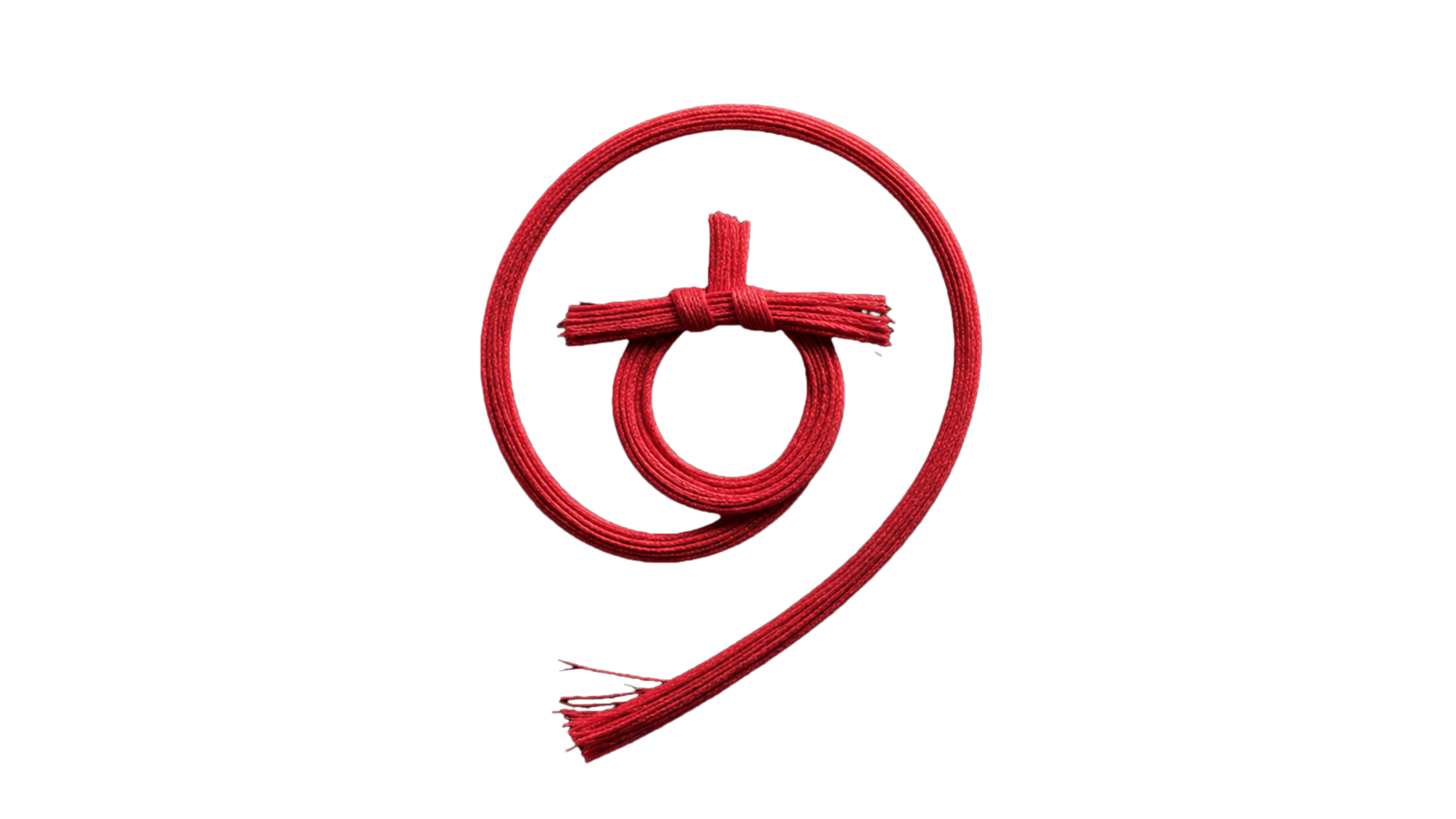
The Red Thread of Fate
There are two ways to make sense of a story like this. One is entirely rational: enough time passes, enough experiences accumulate, and what once appeared to be a series of disconnected events reveals itself as a pattern, which we call hindsight.
The other explanation is older and stretches across cultures and centuries in different versions of the same idea—that certain relationships are, in some sense, waiting for circumstances to catch up with them.
In Japan, it is called the Red Thread of Fate: an invisible thread said to connect certain people long before they meet, capable of stretching across distance, going slack for years, or disappearing from view, but never breaking.
Joy for Life has never felt compelled to choose between those explanations. Perhaps they are simply describing the same phenomenon from different angles.
What is certain is that each part of this story acquired meaning through what followed. A crochet hook picked up amid the uncertainty of 2020 led to the establishment of a nonprofit. Horses, initially an unexpected interest, revealed dimensions of the mission that had not yet been fully understood. An evening spent watching videos led to a single email, which became a friendship that continues to shape Joy for Life today.
Considered individually, each moment appears incidental. Taken together, they form a story that could never have been anticipated while it was unfolding.
Today, the Red Thread is more than a symbol for Joy for Life—it is how the organization understands its own history.
Programs will expand and methods will change, but the purpose beneath them has remained constant because it was never confined to yarn, horses, or any single setting. It has always existed wherever one life quietly changes another.
That is the story of Joy for Life.